
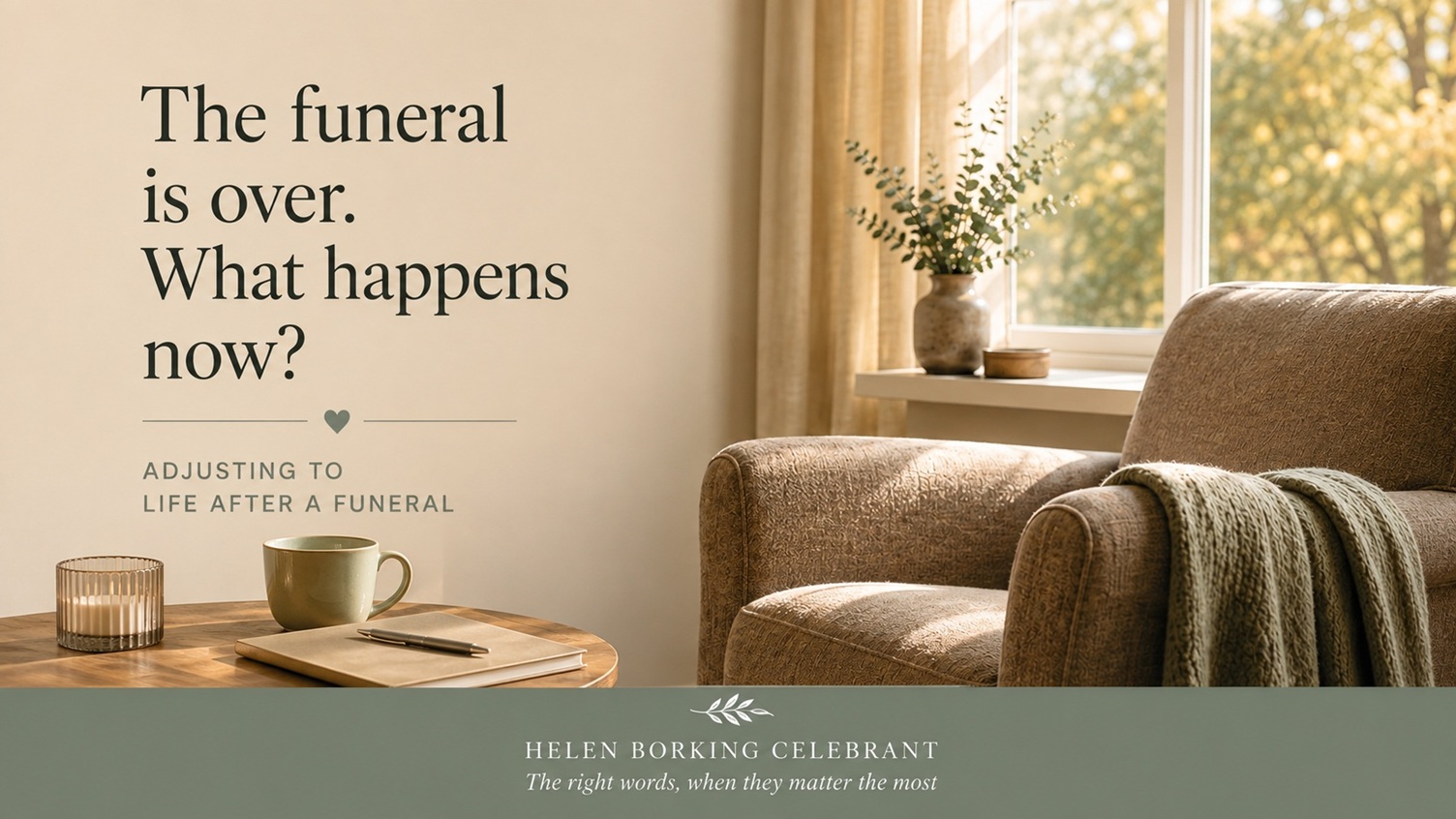

When The Funeral Is Over, What Next?
A funeral can take weeks of planning, conversations, decisions and emotions. Then, suddenly, it’s over. The flowers begin to fade, the cards are still on the mantelpiece and everyone else seems to be getting back to normal. However, when you are grieving, life may feel anything but normal. Adjusting to life after a funeral can be one of the hardest parts of bereavement, yet it is something we perhaps don’t talk about enough.
Coping With Grief After a Funeral
Before a funeral, there is often so much to do. There are arrangements to make, people to speak to, music to choose and memories to gather. Even when you feel exhausted, something else seems to need your attention.
Then comes the funeral itself.
You may spend days wondering how you will get through it. Will you cry? Will you manage to speak to people? Will the service feel right?
And then, somehow, you do get through it.
Afterwards, though, things can feel very different.
People go home. Messages become less frequent. The phone stops ringing quite so much. Friends and colleagues naturally begin returning to their everyday lives.
Yet your life has changed.
For some people, grief after a funeral can actually feel harder. There is no longer a service to organise or a date in the diary to focus on. Instead, the reality of losing someone you love can begin to sink in.
If you are wondering how to cope with grief after losing someone, unfortunately there is no instruction manual.
Grief doesn’t work to a timetable.
You may have a day when you feel surprisingly OK and then, the following morning, something as simple as hearing a song, making a brew or seeing an empty chair can knock you sideways.
Equally, you might find yourself laughing and then wonder whether you should. You should.
Enjoying a moment doesn’t mean you have forgotten someone. Neither does going out, seeing friends or beginning to enjoy parts of life again.
Finding Support After Someone Dies
Adjusting to life after a funeral isn’t about “moving on” or leaving somebody behind. Instead, it can be about gradually learning how to carry them with you while your life begins to take a different shape.
Sometimes that happens through the smallest things.
You might cook their favourite meal, tell one of their stories, visit somewhere you used to go together or raise a glass to them on their birthday. Perhaps you will keep one of their funny sayings going in the family. Alternatively, a memory might suddenly pop into your head and make you smile.
Those moments matter.
Of course, there will also be difficult days. Birthdays, anniversaries, Christmas and family occasions can bring emotions back to the surface. However, sometimes it is an ordinary Tuesday afternoon that catches you completely by surprise.
So, be gentle with yourself. Accept the invitations you want to accept and say no when you need to. Talk about the person who died if you want to talk about them. Most importantly, don’t feel you need to pack away your memories simply because the funeral is over.
Where Can I Get Help With Grief?
Sometimes grief can feel too heavy to carry alone.
Family and friends can provide enormous comfort. However, there may also be times when talking to somebody outside your immediate circle feels easier. Fortunately, there is bereavement support in the UK for people who need information, someone to talk to or help finding specialist services.
The Good Grief Trust brings together bereavement services and useful information in one place, helping people find support that may be right for them.
Cruse Bereavement Support also provides grief and bereavement information and support for people following the death of someone close.
Additionally, your GP can be a useful starting point if grief is having a significant effect on your everyday life and you feel you need further support.
There isn’t a correct way to grieve, and asking for support doesn’t mean you are doing grief badly. Sometimes you simply need somebody to listen.
Sometimes, losing someone also makes us think about our own wishes and the things we would want our family to know. That is one of the reasons I offer my free Legacy Conversation – a relaxed opportunity to talk about your funeral wishes, the stories you would want remembered and the things that matter most to you.
As a funeral celebrant in Lancashire, I spend time with families before a funeral hearing the stories that made their person who they were. There are funny stories, ordinary stories and, sometimes, memories somebody around the table had almost forgotten until another person says, “Do you remember when…?”
Those stories don’t stop mattering when the funeral ends.
In fact, they can become even more precious afterwards. The funeral may mark a goodbye, but love, memories and stories have a habit of carrying on.
Helen Borking Celebrant
‘The right words, when they matter the most’
Helen Borking – Independent Celebrant – Lancashire and beyond
📞 07702 735000
🌐 www.helenborkingcelebrant.uk
📧 helen.celebrantuk@gmail.com
📘 Helen Borking Celebrant
📷 @helenborkingcelebrant